Jan 012014

 The mind of the fossil is not too old to learn anymore than the body is.
The minds of adults do work differently than children’s. Unfortunately, little thought has been given to these differences other than to say adults don’t learn as well as children. Certainly most teachers and students don’t understand these differences. While these differences may complicate the adults’ ability to learn to play the piano; they certainly don’t make it impossible. read the rest
The mind of the fossil is not too old to learn anymore than the body is.
The minds of adults do work differently than children’s. Unfortunately, little thought has been given to these differences other than to say adults don’t learn as well as children. Certainly most teachers and students don’t understand these differences. While these differences may complicate the adults’ ability to learn to play the piano; they certainly don’t make it impossible. read the rest  Adults bring a great deal of baggage with them to their lessons because of their history with music and education. They come insecure about their musical knowledge and afraid of the power they feel in music. Their memories of teachers are mixed. They are justifiably cautious about starting a relationship with a new one. Further, adults misunderstand the learning process as it relates to piano. read the rest
  The body of the fossil is not too old to learn, it’s just fine. The fossilization of the body is a myth. It’s an exaggeration. Even in our “advanced years” the body is marvelously capable. As we get older we become aware of the changes in our bodies that make us physically stiffer and less responsive. read the rest
 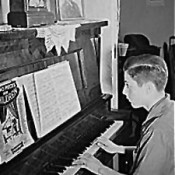 What I’ve learned from my adult students is that the bruises they suffered in their education as children and young adults interfere with their learning to play the piano much more than any problems of an aging mind or body. What I’ve learned to do for my students who are children is to try to do no harm. read the rest
  This installment of MusicalFossils is a series of e-mails written between Victoria (Vica) Achim, from Russia, and me. Most of them are hers. Vica is an adult amateur pianist studying in a culture where classical music is held in higher esteem than it is in the United States. Russia has (I do not know if this continues) a national system of musical education that seeks to find and develop the best and brightest young musicians as a national treasure, somewhat like athletes in the US. read the rest